 If your company is using AI without a policy, you are already behind
A year ago, AI policies were optional.
Today, they are quickly becoming expected.
Continue Reading AI Policies Are Becoming a Legal Requirement, Not a Nice-to-Have

If your company is using AI without a policy, you are already behind
A year ago, AI policies were optional.
Today, they are quickly becoming expected.
Continue Reading AI Policies Are Becoming a Legal Requirement, Not a Nice-to-Have
 Most business owners don’t consider themselves facing an employment issue.
Until they do.
And when they do, it’s usually costly, disruptive, and entirely preventable.
Continue Reading Independent Contractor vs Employee: The Legal Line That Can Ruin Your Business
 If your business is using AI, you are already taking on legal risk
Most companies do not realize this yet.
They think AI is:
 You open your email or mailbox and see it:
A formal letter.
An attorney’s name.
Continue Reading Demand Letters Are Surging in 2026. Here’s What to Do If You Get One
 AI adoption is not happening at the top. It is happening in the shadows.
Most executives think AI adoption is a strategic decision.
It is not.
 Most contracts were not built for AI. That is the problem.
Right now, companies are layering AI into their business:
•drafting contracts with ChatGPT
Continue Reading AI and Contracts: What to Fix Before It Costs You
 You do not have an AI adoption problem. You have a visibility problem.
Most business owners assume AI adoption is controlled.
It is not.
 Most business owners believe forming an LLC is the finish line.
It’s not. It’s the starting point.
And in 2026, we are seeing a clear shift: personal liability is creeping back in, even for business owners who think they are protected.
Continue Reading Personal Liability Is Back: Why Your LLC Might Not Protect You Anymore
 The uncomfortable truth: your AI conversations may be evidence
If you are using AI tools like ChatGPT, Claude, or Google Gemini to ask legal questions, draft contracts, or think through business decisions, you need to understand one thing:
Those conversations are likely not protected by attorney-client privilege.
Continue Reading Your AI Chats Are Not Privileged: What Businesses Need to Know Before It’s Too Late
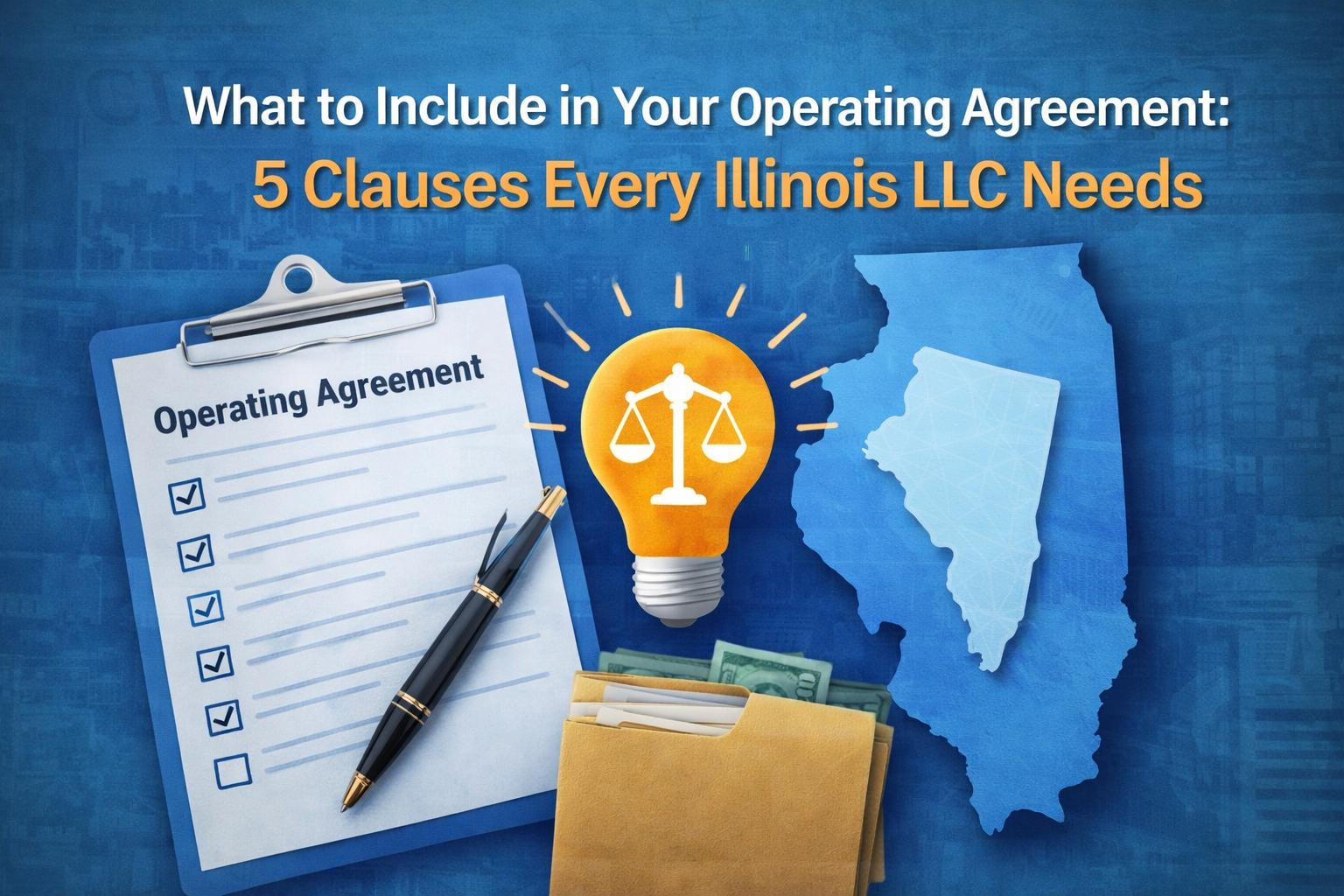 An Operating Agreement is the single most important internal document for your LLC. Yet many business owners either skip it entirely or rely on generic templates that don’t reflect how their business actually operates.
Whether you’re forming a single-member LLC or building a multi-partner company in Illinois, your Operating Agreement defines ownership, decision-making, financial structure, and how conflicts are handled.
At Bellas & Wachowski, we’ve reviewed and drafted hundreds of Operating Agreements. The difference between a strong agreement and a weak one often determines whether a business avoids disputes or ends up in litigation.
Continue Reading What to Include in Your Operating Agreement: 5 Clauses Every Illinois LLC Needs
 Artificial intelligence is entering litigation faster than courts can formally regulate it. Judges are not responding with panic. They are responding with discipline.
The first sanctions issued for AI misuse in legal filings reveal how courts are approaching this new reality. The issue is not the technology itself. The issue is responsibility.
Courts are drawing a clear line between AI used as a legal tool and AI used as a substitute for legal judgment.
Continue Reading The First Sanctions for AI Misuse in Court Are a Warning of What Comes Next
 Artificial intelligence is rapidly changing how information is created. Now it is beginning to change how evidence appears in court.
Emails that were never written. Audio recordings that were never spoken. Reports that resemble expert analysis but were produced by a machine.
Courts across the United States are confronting a challenge they were never designed to solve. Evidence that looks authentic, sounds credible, and may never have existed in the real world.
 What Is a Business Divorce?
A business divorce refers to the breakdown of a working relationship between business partners or co-owners that makes continued collaboration impossible.
Unlike personal divorces, business divorces involve disputes over control of the company, financial transparency, ownership rights, and fiduciary responsibilities.
Continue Reading What Is a Business Divorce? A Guide for Business Owners
 Most business partnerships do not collapse with dramatic confrontations or lawsuits.
They unravel quietly.
Communication slows. Financial transparency fades. Strategic decisions begin happening without discussion. One partner gradually pulls away while another assumes more control.
Continue Reading The Silent Business Divorce: How Partner Disputes Quietly Destroy Companies
 Non-compete agreements continue to be one of the most misunderstood areas of employment law for business owners.
Recent headlines about federal regulation led many employers to believe non-competes were banned nationwide. In reality, the situation is more nuanced. While federal regulators have attempted sweeping changes, Illinois law still primarily governs when and how non-compete agreements can be used.
For employers, understanding these rules is important. Improperly drafted or implemented agreements can become unenforceable and may even expose businesses to legal risk.
Continue Reading Illinois Non-Compete Law FAQ: What Employers Need to Know
 Many business owners heard headlines saying the Federal Trade Commission “banned non-competes” and assumed restrictive covenants were essentially over.
That is not what ultimately happened.
While the FTC attempted to implement a sweeping nationwide ban, that rule never took effect. Courts blocked it, the appeals process ended, and the agency later removed the rule from federal regulations. As a result, there is no nationwide prohibition on non-compete agreements in 2026.
Continue Reading Illinois Non-Compete Agreements in 2026: What Business Owners Need to Know